Patterns in Payment Option Preferences Among Table Game Enthusiasts Participating in Multi-Sport Events
Skriven av Morgan Krüger · 2026-08-31
Patterns in Payment Option Preferences Among Table Game Enthusiasts Participating in Multi-Sport Events
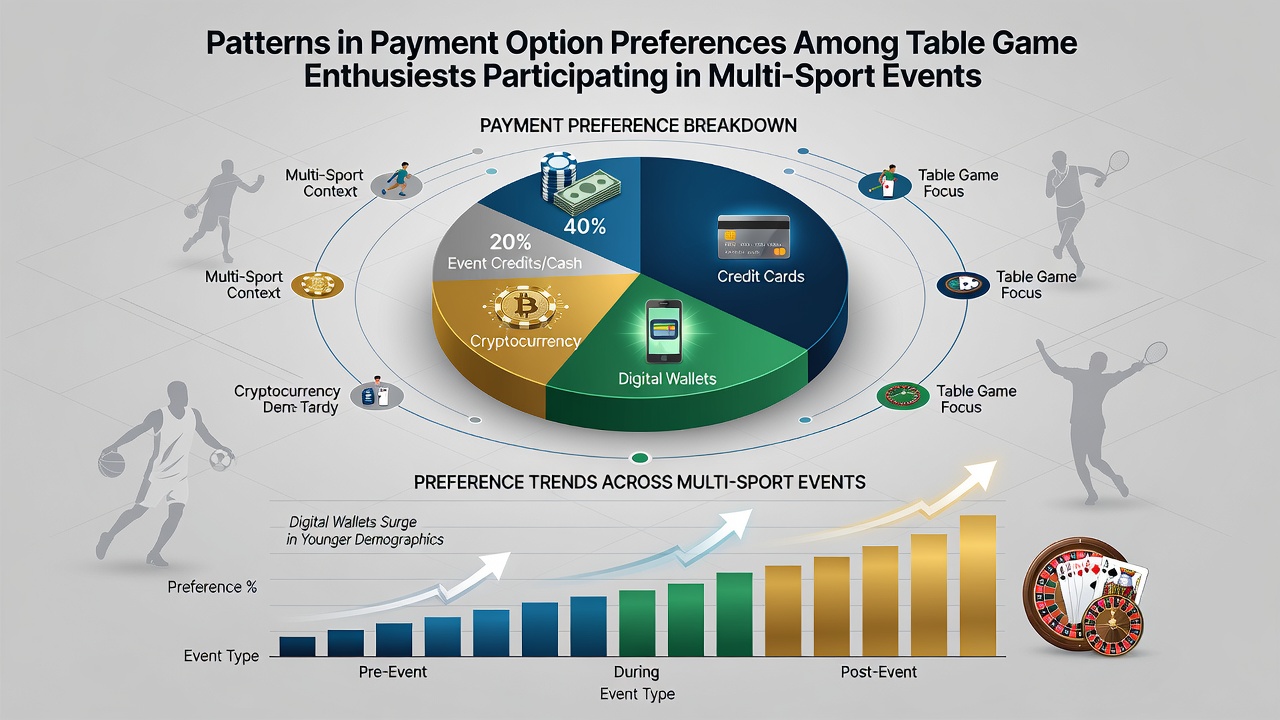
Table game enthusiasts who attend multi-sport events often demonstrate distinct patterns when selecting payment options for their gaming activities, and these choices reflect broader shifts in transaction technology as well as event-specific logistics that shape how funds move between accounts and gaming platforms. Data collected across several international tournaments shows consistent preferences for digital wallets and instant bank transfers over traditional credit cards in regions where such methods receive regulatory support, while cash remains prevalent in jurisdictions with strict payout rules.
Common Payment Methods and Their Adoption Rates
Observers tracking transaction data at venues hosting multi-sport competitions note that e-wallets account for a growing share of deposits into table game terminals, particularly during peak attendance periods when rapid top-ups become necessary between matches, and this trend aligns with reports from the Nevada Gaming Control Board that document rising volumes of digital wallet activity in integrated resort settings. Bank transfers via apps gain traction among participants who value lower fees and direct account linking, whereas prepaid cards see steady use in locations where anonymity matters to players navigating temporary event infrastructures.
Studies conducted by the Australian Institute of Criminology highlight that table game players at large-scale sporting gatherings favor methods supporting quick verification steps, which reduces downtime between hands or rounds, and these patterns hold steady even as event organizers introduce new contactless terminals. Cryptocurrency options appear in select markets where local rules permit blockchain-based transfers, though adoption rates stay lower than other digital alternatives according to figures released ahead of the August 2026 multi-sport schedule.
Regional Variations in Preferences
Payment behaviors differ noticeably across continents, with North American participants showing stronger uptake of mobile-integrated banking apps during events that span multiple venues, while European attendees lean toward established debit card networks that integrate seamlessly with on-site kiosks. In Asia-Pacific locations, QR code payments tied to local banking systems dominate among table game crowds, as these options handle high-volume small transactions efficiently during crowded tournament days.
Researchers examining records from the 2025 season observed that multi-sport events held in urban centers with robust public transit networks correlate with higher use of contactless mobile payments, because enthusiasts move frequently between competition sites and gaming areas without carrying physical cards. This geographic split becomes more pronounced when events cross borders, forcing players to adapt to varying regulatory frameworks that govern transaction speeds and reporting thresholds.
Impact of Event Logistics on Transaction Choices

Event organizers who coordinate table game facilities alongside athletic competitions often install hybrid payment systems that accommodate both local and international methods, and this setup influences how enthusiasts select options based on processing times during short breaks between sessions. Data indicates that players participating in events spanning several days tend to preload accounts using bank transfers before arrival, which minimizes interruptions once competition schedules intensify.
Those monitoring transaction logs note that loyalty programs linked to specific payment providers see increased enrollment when multi-sport events offer bundled rewards across gaming and ticket purchases, creating incentives that steer preferences toward integrated platforms. Security features such as biometric authentication further shape decisions, since enthusiasts at crowded venues prioritize methods that reduce exposure during high-traffic periods.
Technological and Regulatory Influences
Advancements in real-time settlement technology have expanded the range of viable payment choices for table game participants at multi-sport gatherings, and regulatory updates in multiple jurisdictions continue to determine which options gain mainstream acceptance. The Canadian Gaming Association reports that jurisdictions permitting faster cross-border transfers observe measurable increases in digital method usage among international attendees, whereas areas with slower approval processes retain higher cash volumes.
Observers following preparations for August 2026 note that organizers are testing additional payment integrations that align with evolving standards for responsible gaming tracking, which may standardize certain preferences across future events. These developments build on existing patterns where table game enthusiasts balance convenience against compliance requirements when funding their activities amid packed athletic calendars.
Conclusion
Patterns in payment option preferences among table game enthusiasts at multi-sport events continue to evolve in response to technological capabilities, regional regulations, and the practical demands of event attendance, with digital wallets and bank-linked transfers leading in many markets while cash and cards retain roles in specific contexts. Data from regulatory bodies and research institutions shows these choices adapt to venue infrastructure and schedule intensity, providing a clear picture of how transaction habits intersect with large-scale sporting competitions.